Sunday, 4 December 2016

Research - Magazine Advert

Advert Analysis-


Research - Magazine Advert

What is a magazine advert?

Magazine adverts are released by the marketing group of a record label specifically for the artist's album. It is used as a way to build an audience and a buzz before it's release, similar to how a trailer or film poster advertises a film. 
However, due to the uprise of social media and other online platforms such as YouTube, magazine adverts are not as common as it is cheaper to publicise a digital copy online rather than to print a physical copy. 

Examples of Magazine adverts - analysed 


This magazine advert, presents Rihanna's album 'Russian Roulette' for the first time. 
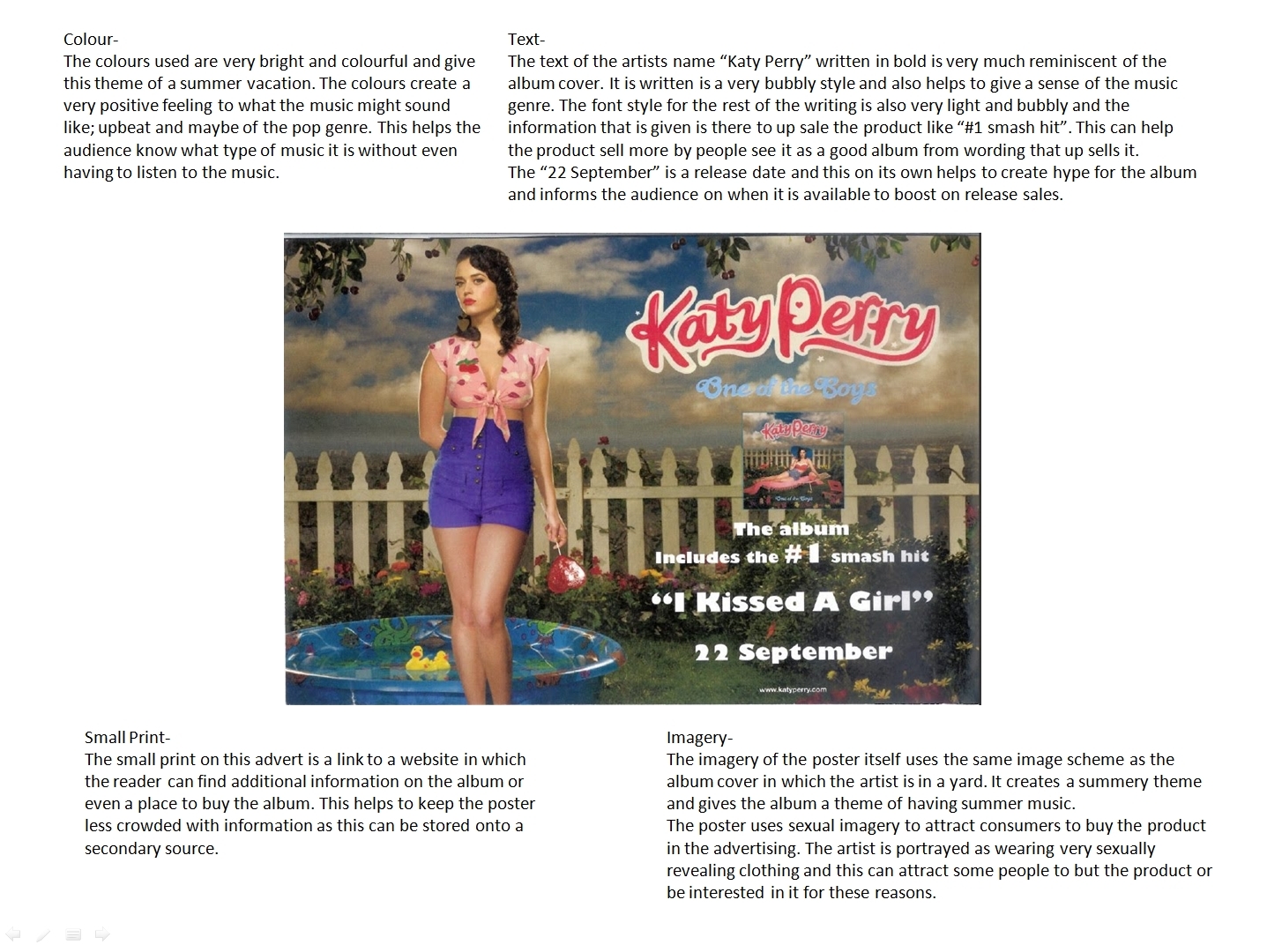
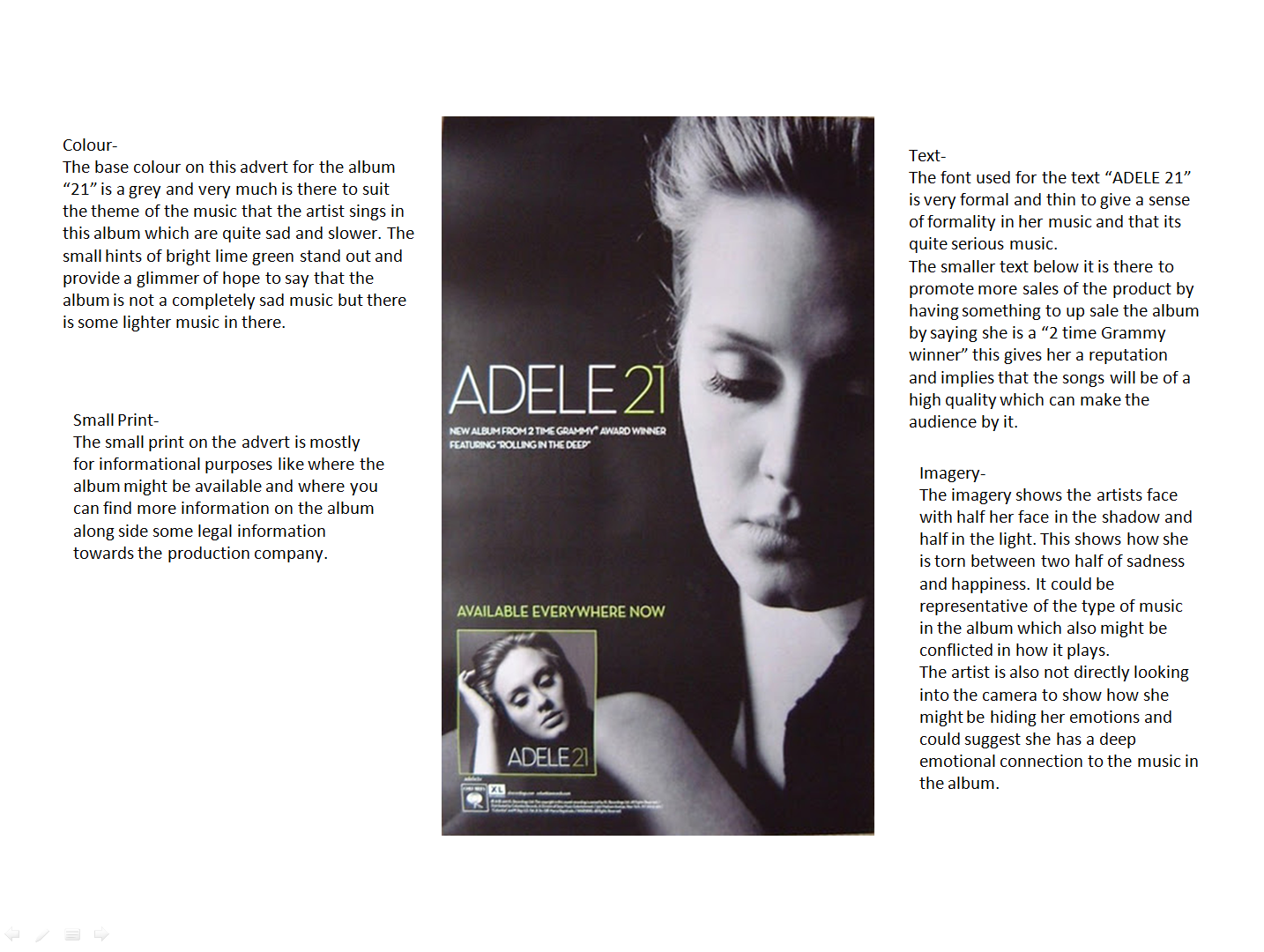
At first glance we notice the graphics and images used in the advert. The main feature would be the actual photograph/image of the artist. This image was not sourced by random but was taken from a photo shoot specifically for the album cover. Therefore there are synergistic links between the magazine advert and the actual album itself. 

The next aspect of the advert which stands out is the text. In a bold text, which follows the themed font of the album, is the artists name 'Rihanna'. This is the largest text on the page as it is possibly the most important information - who's music it is. This is because audiences are most likely to know the artist from their previous music.  


Saturday, 3 December 2016

Research - Digipak


Research - Digipak

Digipak Research

This is a sample of my CD collection. Each of these CDs contain an interesting and exciting digipak.
Digipaks are marketing tools intended to act as an incentive for purchasing a physical copy of the music rather than streaming the music from the internet. Digipaks are only seen and received when a person owns a physical copy of the music.
Some but not all Digipaks include additional content such as:
Membership cards
Lyric sheets
Disk impression
Band info
Free image
Exclusive download links to B-sides 
Free posters or postcards.

Whatever people say I am that's what I am not

This Digipak is extremely simplistic and minimalistic. The first aspect of the Digipak which is visually clear is the dull and greyscale colours used. This was a common theme in indie bands at the time and still is now. The reason this was so popular with indie bands is because they thought that if there was a piece of art on the front then it would take away from the music or perhaps skew the consumer's opinion on the album or attitude towards the music. 

The emphasis is 100% focused on the music at hand rather than the artist's persona this is different to many mainstream artists who have a lot of focus on their persona and look. This could be interpreted as a conceptional album because of the simplistic look and the portrait photograph featured on the front panel of the digipak.

The photograph of the man smoking glamorises something which is usually looked down upon and slightly taboo, this causes controversy within the album cover. This image along with album title 'Whatever People Say I Am, That's What I'm Not' suggests reasons to the meaning of the album which could be a depressingly realistic depiction of the north of England. However, this is up to interpretation of the audience.The Arctic Monkeys could have just chosen that image to look cool/trendy and appeal to their teenage target audience.The first image could be 'Whatever People Say I Am' and then the image with him wiping away tears could be 'That's What I'm Not'.

This is a very successful and impactful Digipak in my opinion. A good Digipak for me should reflect the mood, themes and content of the album. This Digipak allows the consumer to think about and interpret their own meaning or to acknowledge it and move onto the music which proves it has an underlying sense of intelligence within. 


 Melodys Echo Chamber. The Genre of this music is Psychedelic. This is very clear through the bright colours present on every panel of the digipak. This digipak was especially interesting as it was set up like an old vinyl record. The cardboard sleeve to the left of the picture fitted the CD which was inside another sleeve. This was a really refreshing way of displaying and presenting a CD.


 King Krule. The Genre of this music is very mixed wiht elements of industrial music and Hip Hop. Although the constant and present theme throughout the song is the theme of urban London. The can be seen through the digipak by the use of dark and contrasting colours mixed with handwritten notes and song names.


 The names of the songs are written on the back panel of the digipak. The colour scheme is most present on the front and back panels of the digipak.


 This digipak includes an poster of an enlarged and more developed image of the front panel(album cover). This poster folds up into a sleeve opposite where the CD is positioned.

 Tame Impala. The Genre of this music is psychedelic. This is not clear through just looking at the front and back panels of the digipak. The front image is a photograph of Luxembourg gardens in Paris. My interpretation of this image is that we, the consumers are being put in the view of the person being captured in this album musically and visually. We are viewing a brightly lit park which features happy looking people enjoying the sun. This all occurs while the viewer is 'trapped' behind bars which separate the two. This could represent an 'introvert' living in his/her owns world perhaps experiencing isolation and solitude at the same time.


This image of Kevin Parker laying down in his Home Recording studio may represent his own introspection and solitude.

The effect used on the image of the Gardens creates a sense that an alternative world is created behind the mind fo the persona .
Research - Digipak

What is a Digipak?

A Digipak is a disk cover that offers consumers of CD's of digital media with extra content that would not be gained if the product was bought digitally. It provides physical as well as digital bonuses for the consumer. This can be through extra little booklets of information or extra CD's that might provide behind the scenes footage for example.

Digipaks are most commonly used in the music industry when it comes to the sale of albums or singles to sell a product to fans with extra bonuses to entice them to spend more on the product.
Most Digipaks use 6 or more panels and include graphics that fit the genre of the music it represents, as well as information panels like song names, quotes, album names and even interviews.

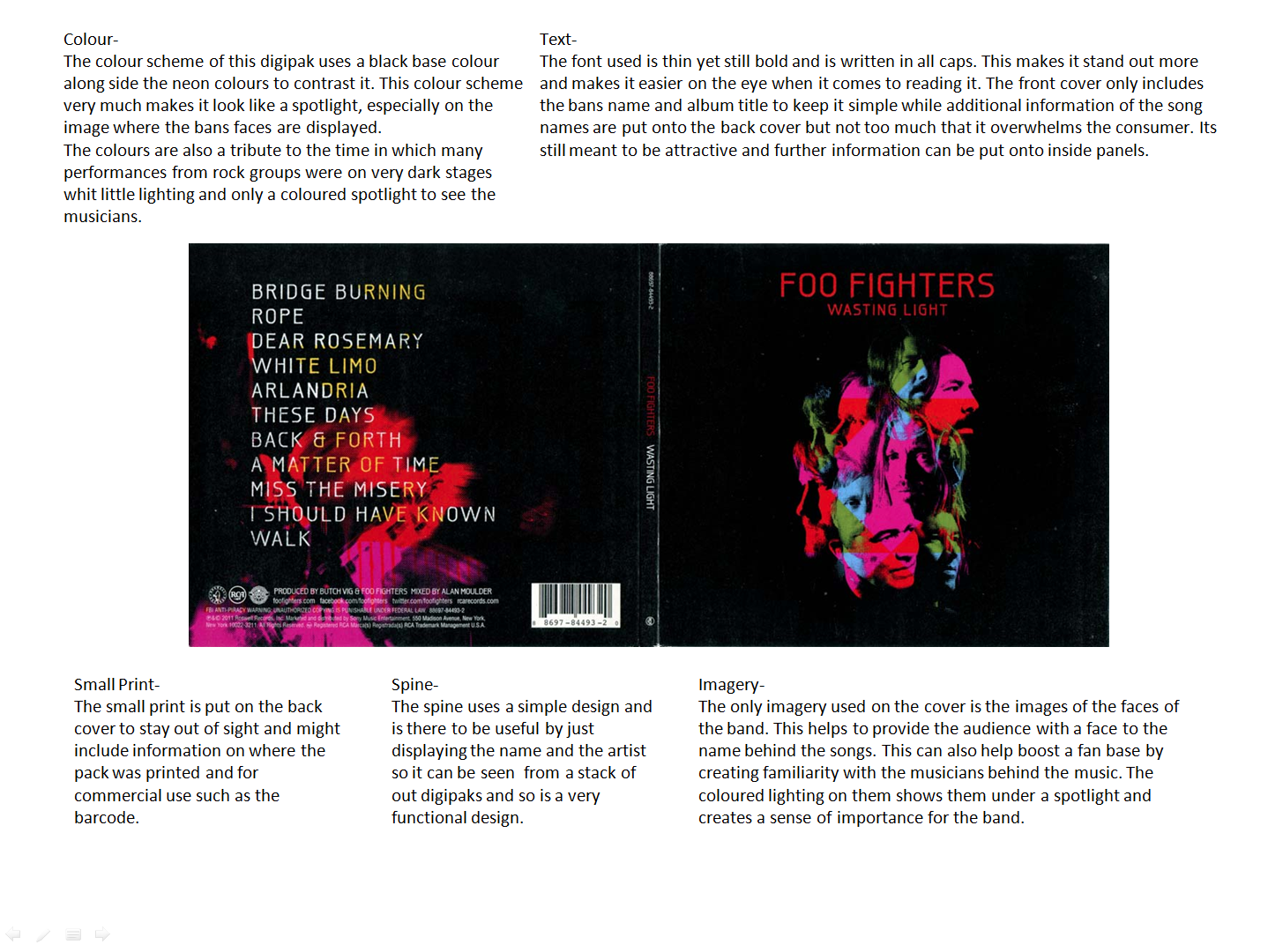
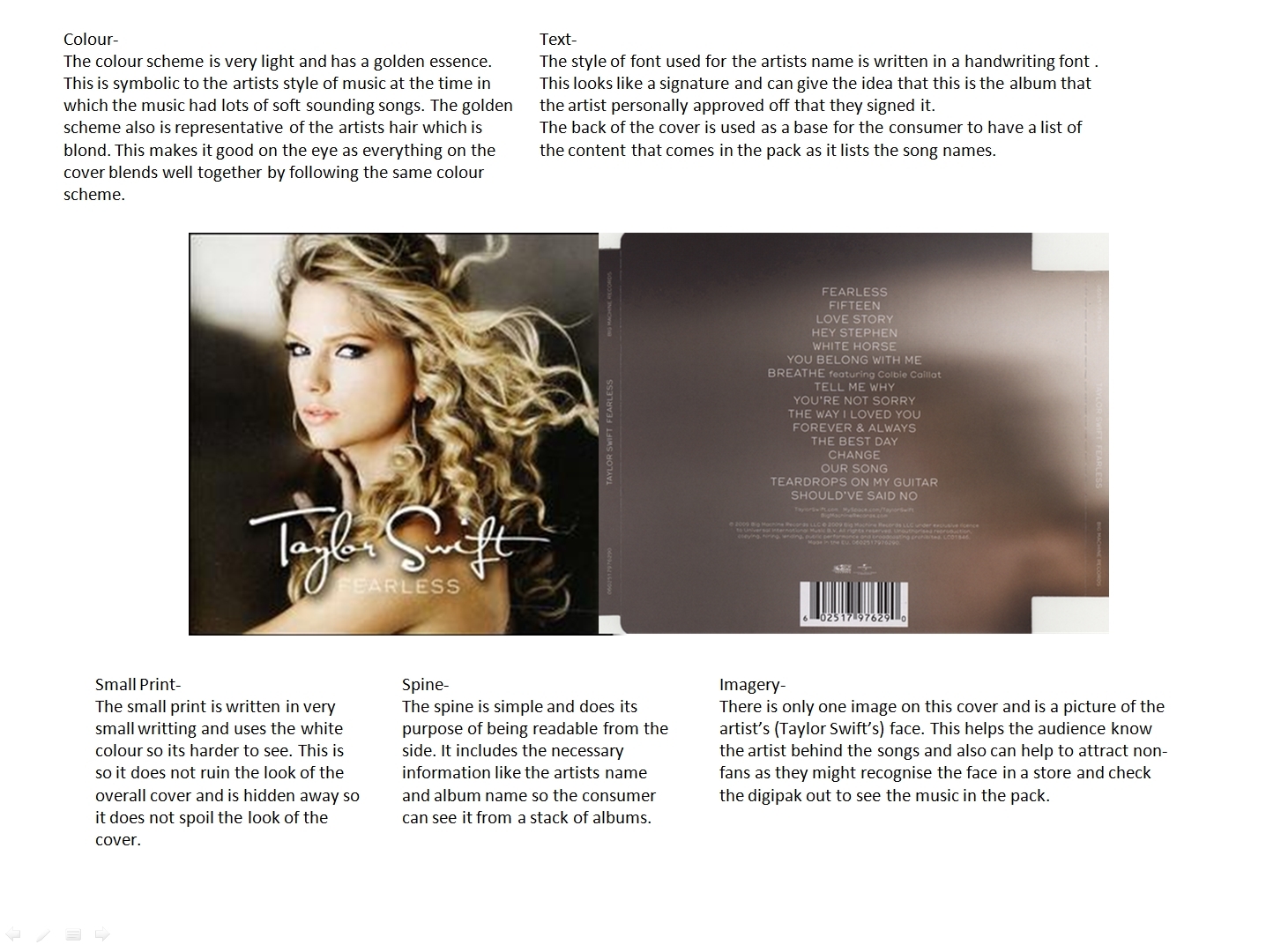
Some Examples of Digipaks-

Image result for pop digipakImage result for pop digipak
Image result for pop digipak

Digipak Cover Analysis-

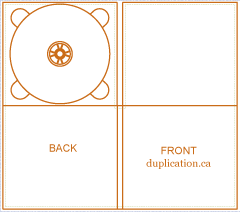
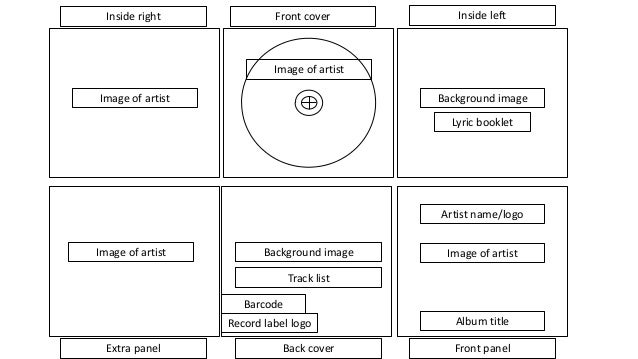
Templates-

6/12 Panels:
Image result for digipak templates

3/6 Panels:

2/4 Panels:
Image result for 3 panel digipak template

Research - Digipak

What is a DigiPak?

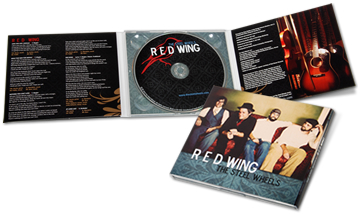
Digipaks are a form of packaging used for DVDs and CDs, containing a cardboard gatefold piece which is printed with album art and then covered by a plastic outer case which supports one or more DVD of CD disks.
The packaging serves as a marketing technique/selling point used by record labels to promote new singles or a new album - which would advertise the artist and the single in order to attract an audience.

What are the contents of a Digipak?

A traditional Digipak would contain;

  • A Track list - which is printed onto once face of the Digipak, a list of all the songs/tracks  available on the CD. 
  • Graphics and Images - which would include album art, typically following a theme of the artist or the style of music of the album. It may also contain still images from the single's music video.
  • CD Holder - Within the internal packaging, it is common to find the CD holder, which is a single panel on the case that holds the CD in place. This panel is designed to protect the disk from impact and preserves the quality of the reading film - protecting against scratches and dust which would effect the quality of the media when read by the lasers in a player. 
  • Information Leaflets - On another panel of the Digipak, an information leaflet can be found containing information about the artist, messages from the artist to fans, the context of the music and further information about the production of the tracks and album. 
  • Other additional accessories - this may include; lyric sheets, posters, reversible album art, postcards and other images of the band/artist.

What is the layout of a Digipak?

Traditional digipaks consist of 6 panels which includes; a front/ main cover, a back cover, the spine, the internal panels which contain the insert and the disk


Examples of some Digipaks


The Digipaks above are examples that have six panel- the conventional size digipak. Other Digipaks can vary in size from eight to twelve panels depending on the requirements of the company.
The additional panels allow for extra features to be included in the Digipak. This would include addons such as posters, a second disk; which would include addition sound tracks, discount vouchers and coupons that can be used to purchase more albums and special edition merchandise. Some examples of larger Digipaks can be found below.